Best AI Tools for Academic Writing (That Won't Get You Flagged)
I spent a semester testing where the line actually falls between using AI on a paper and cheating with one. The test that held up: is this your thinking expressed with AI's help, or AI's thinking presented as yours? Editing your own argument is fine. Submitting AI's argument under your name is dishonest.
Grammar and citations are already accepted
Every grammar checker is technically AI, and universities have accepted Grammarly and its equivalents for years. Zotero and Mendeley handle citation formatting and DOI lookups. Both are mechanical, so there's nothing here to justify.
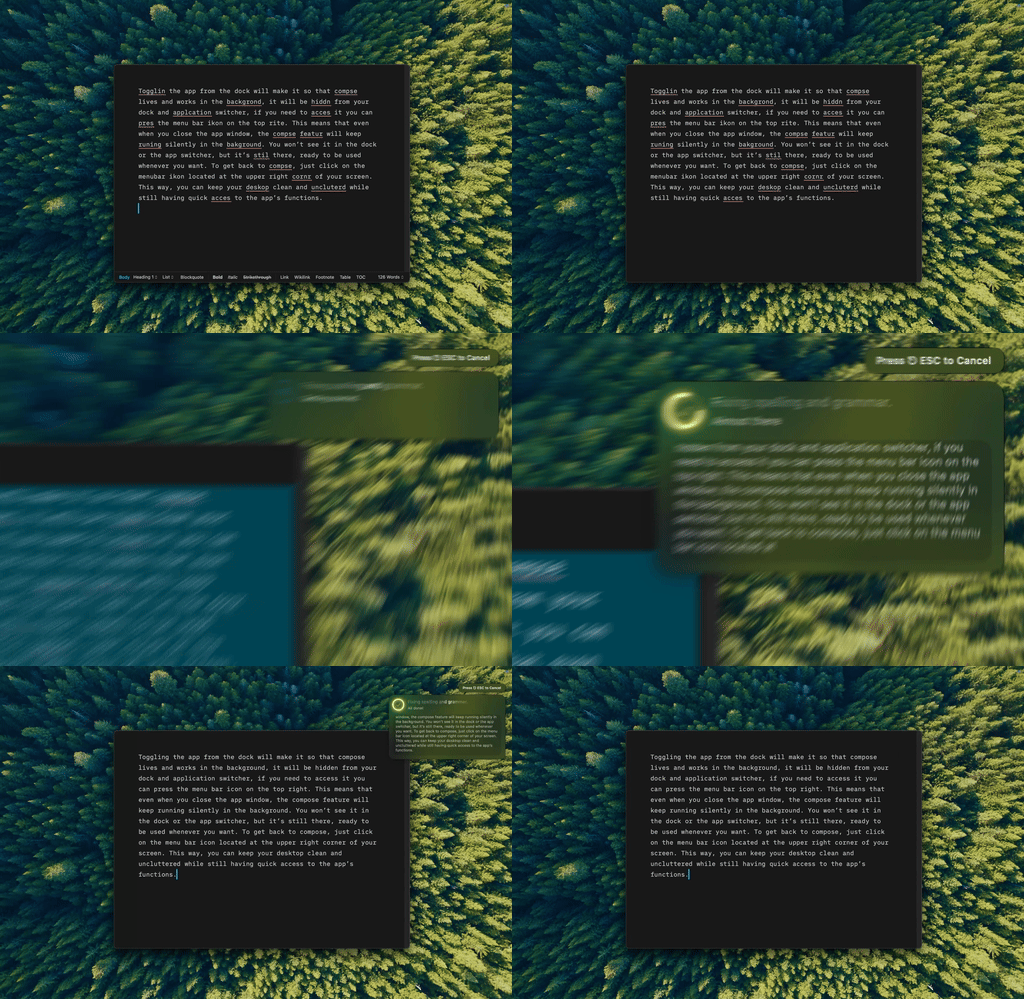
Type Mac doing grammar and clarity edits on my own paragraph. Never a generated one.
Clarity editing is fine if you wrote the argument
Running an unclear paragraph through AI with "rewrite this more clearly, same meaning" isn't different from a classmate suggesting better phrasing. You're polishing expression, not generating ideas. Most institutions agree, though some want you to disclose it, the same instinct behind tightening a bloated paragraph anywhere else.
Research discovery, but verify every source
Elicit and Semantic Scholar find relevant papers and spot gaps in the literature; Connected Papers maps how citations relate. It's better searching, no different in kind from Google Scholar. The catch: LLMs hallucinate citations. Confirm every AI-suggested source actually exists before you cite it.
What actually gets students flagged
Ask a chatbot for a paragraph on a topic like mitochondrial gene expression, it sounds plausible, you paste it in. That's dishonest, and it might also be wrong in ways you can't catch. Try this test: could you explain the paragraph to your professor without notes? If you can't defend it out loud, it doesn't belong in your paper, and the same test applies to essays as much as research papers.
Detection tools miss the point
Turnitin, GPTZero, and Originality.ai all produce false positives, so human-written text gets flagged too. What actually matters: grammar checking and clarity editing are easy to explain to anyone who asks. Generating paragraphs wholesale isn't.
Disclose it if your institution asks
A line like "I used [tool] for grammar checking and clarity improvements; all research and arguments are my own" covers most policies. They vary, so check yours.
The learning paradox
Academic writing is skill-building. Let AI do the hard parts and you don't build the skill. Treat every correction as a lesson: notice the pattern in your own mistakes, and need it less over time.
What I keep running while writing papers
By the end of the semester, the tool I still had open was the one that stayed on the safe side of that line without thinking about it twice.
- Select a paragraph in Word, Notion, or Google Docs, press a shortcut, get the edit in place
- It rewrites the sentence you wrote instead of drafting a new one, so there's nothing to disclose beyond "I used a grammar tool"
- Save a note about your writing style once, and edits keep sounding like you across a whole thesis
The honest limitation: it takes about a week of catching yourself mid copy-paste before the shortcut becomes automatic. After that it's faster, but the first week takes deliberate effort.
Every paragraph stays mine. Type Mac only changes how fast I can fix one.