
Attention Residue: Why Task-Switching Destroys Your Writing
I lost the same sentence to the same Slack notification enough times that I started paying attention to what happened after I clicked back. What came back wasn't what I'd been writing. It took me a month of noticing this to realize the interruption itself was doing the damage, not the two minutes I thought I'd spent.
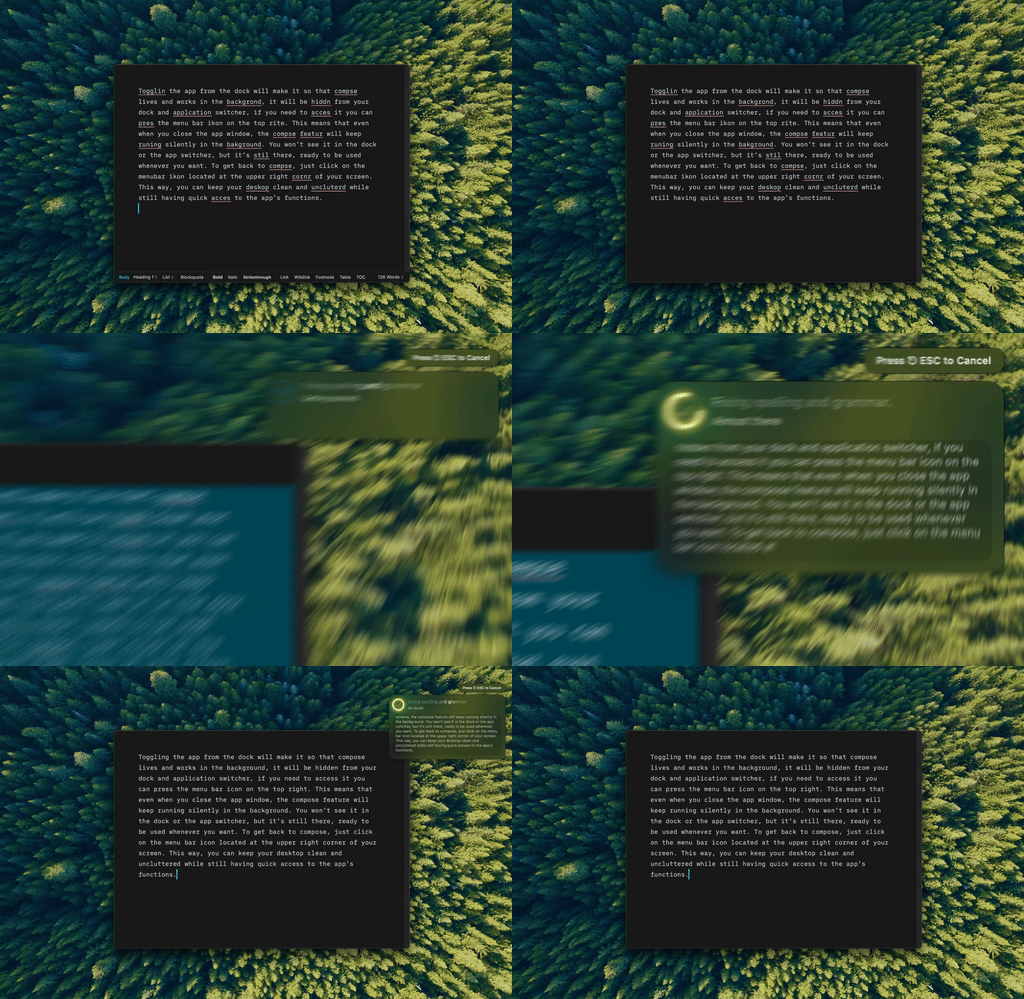
Type Mac — that's a grammar fix landing inside the same message I was already typing, no tab change, no new window to lose the thread in.
Attention residue: a measured cost, not a feeling
Sophie Leroy named this in 2009: when you switch tasks, part of your attention stays stuck on the one you left, even after you finish it and try to refocus. Her studies put recovery time at 15 to 25 minutes per switch. A "quick check" of email isn't a 30-second break. It's a real dent in the next 20 minutes of work.
Writers lose more than coders do
A coder who gets interrupted returns to visible code and compiler errors that show where they left off. A writer returns to a blank cursor with no scaffolding: the argument's shape, the tone, the half-formed next sentence lived only in working memory, and the interruption erased it. I've lost entire paragraphs to a single Slack check, not as a figure of speech. What I wrote after getting back was worse every time, because I was reconstructing instead of creating.
Self-interruptions do the same damage
The urge to check something, a research detour mid-draft, editing before the ideas are down: these cost as much as a notification does. So does residue you can't see. An unfinished task, an upcoming meeting, an unanswered email all sit quietly on the attention you need for the next sentence.
The fix I actually used
Phone in another room. Notifications off, not silenced. One app on screen. No browser unless the work needs it. That last one was the hard part, because most of what pulled me into a browser wasn't email. It was a tab I opened to fix a sentence, a smaller version of the same problem I cover in digital minimalism for writers.
Deep work compounds
Cal Newport's term for sustained concentration on demanding work is deep work, rare because most of our digital environment is built for interruption. I go through the fuller argument in slow productivity for writers. Four interrupted hours produce less than two uninterrupted ones, and that gap compounds over a year into the difference between an average portfolio and a good one.
The switch I stopped making
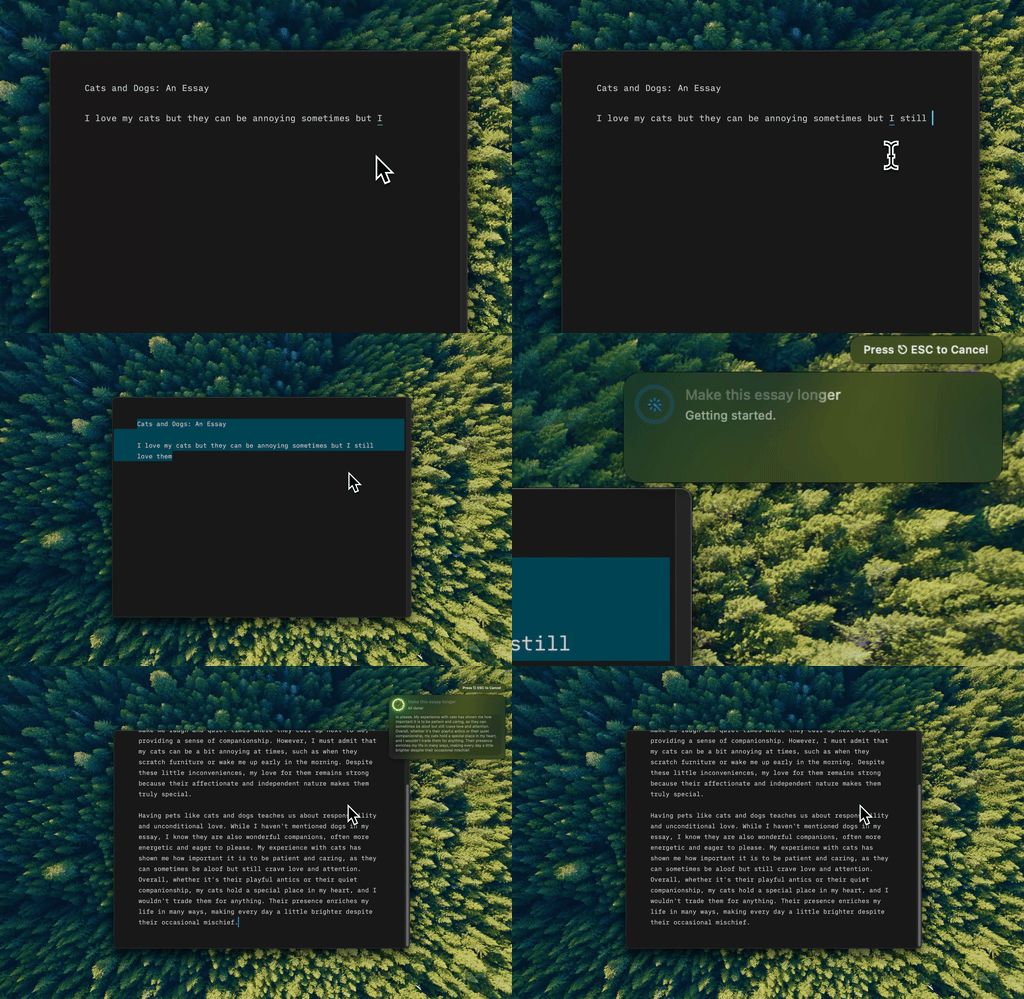
I closed the tabs, silenced the notifications, and still kept opening a ChatGPT tab to fix a sentence, attention residue I was inflicting on myself. What broke the habit was removing the tab entirely. Type Mac fixes, rewrites, and expands text where I already wrote it, so the 20-minute penalty Leroy measured never starts. It's a native app, not a browser wrapper, the same distinction in native Mac apps vs. Electron: one less process competing for focus. The honest part: it took about a week of using the shortcut before it beat the habit of opening a new tab.
Close the tab you didn't need to open. Type Mac fixes text where you wrote it.