
Digital Minimalism for Writers: Reclaim Your Attention
I counted the apps on my Mac that were supposed to make me a better writer: a word processor, a note app, research tools, an AI assistant, a grammar checker, and a browser holding dozens of tabs. Cutting that list down did more for my output than any single tool on it ever did. 86% of Gen Z say they're trying to cut screen time, and only 14% feel comfortable with how much they use their devices. The tool pile I'd built was a smaller version of the same problem.
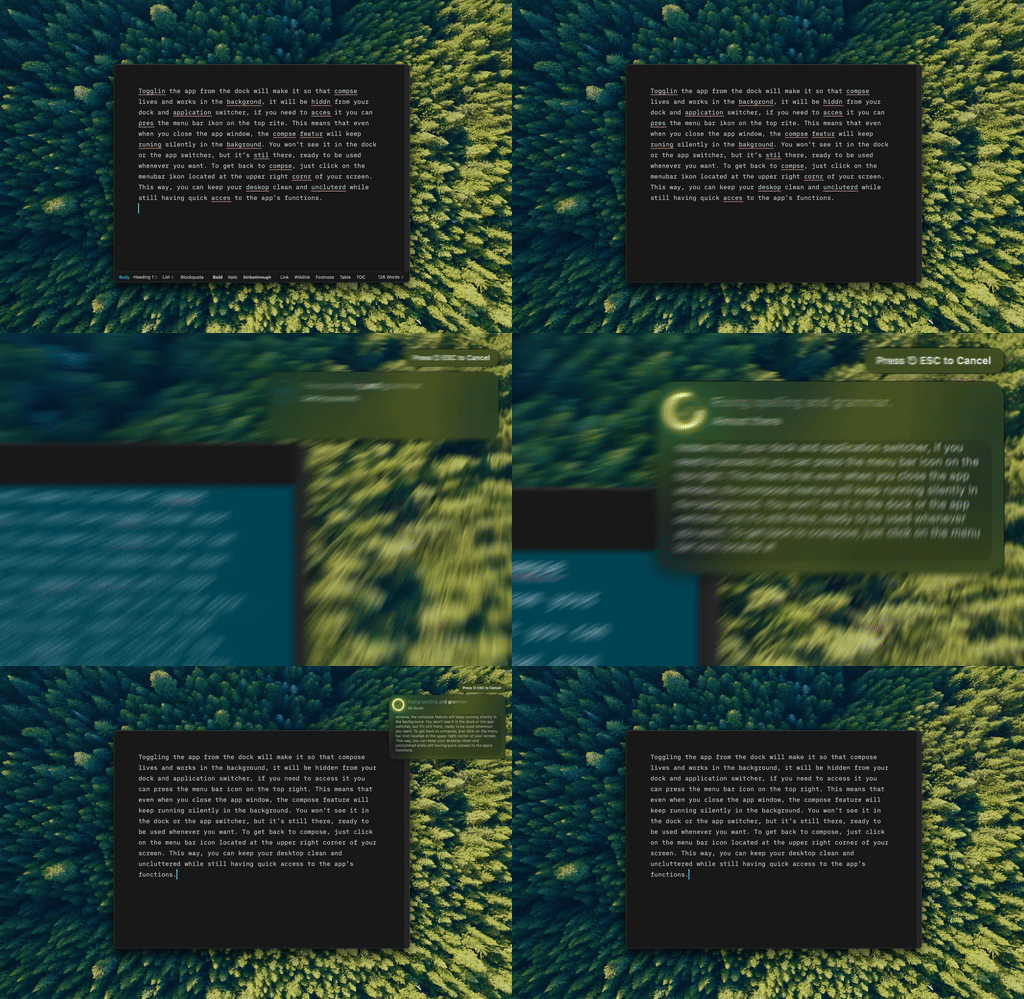
Type Mac — one shortcut doing what used to take a grammar checker, a separate rewrite tool, and a tab open for translation.
Fewer tools, chosen deliberately
Cal Newport's principle is to focus your online time on a small number of activities that support what you actually value. For writers, that means fewer tools, less time online, and technology that serves the work instead of competing with it. I go through the pace side of that argument in slow productivity for writers; this is the tools side.
Input adds up the same way tools do. Infinite-scroll "research," newsletter hoarding, threads read in place of an actual book: input expands to fill whatever attention you give it, and output suffers for it.
Ask if a tool earns its attention cost
Not "could this be useful" or "everyone else uses it." My note-taking app had become a graveyard of ideas I never revisited, so I cut it and rebuilt the habit around the folder structure I cover in building a second brain for writers. Menu bar apps get the harshest version of this test, because they sit in view all day; the short list that survived it is in Mac menu bar apps for writers. If an AI tool has you spending more time prompting than writing, cut that too.
Boredom is productive
When I got stuck on a sentence and reached for my phone, I was stealing from the part of my brain that solves problems in the background. Mind-wandering isn't wasted time. It's where ideas connect. I started leaving my phone behind on walks and sitting with the stuck moments instead of escaping them.
The day I settled on
- Morning: creation, no internet, one document open
- Midday: batched email and messages, kept out of the focus block
- Afternoon: editing
- Evening: analog recovery
The specifics matter less than the principle. Protect creation time from everything else, including the apps that promise to help you protect it.
The one app that survived the cull
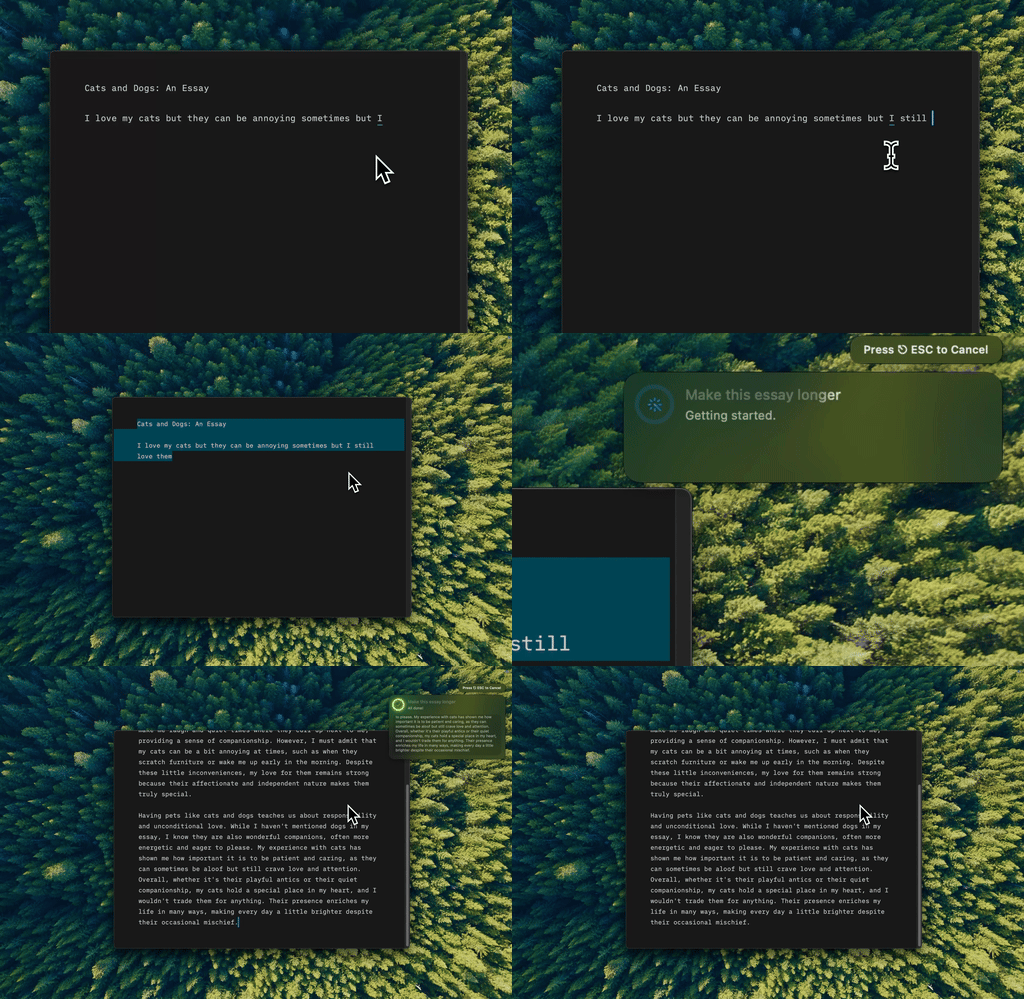
Everything else got cut: the standalone grammar checker, the separate rewrite tool, the tab I kept open for translation. What replaced all three is Type Mac, because it's one shortcut instead of three destinations. I select text wherever I'm writing, Mail, Notion, a text field on some random site, and the fix happens there. No new window to manage, no history to prune later. The honest tradeoff: it costs money, against every free extension I deleted to make room for it. A minimalist doesn't collect five free tools that half-work. They pay for the one that does.
Fewer tools, not more. Type Mac replaced three of mine.