
Building a Second Brain for Writers: PKM That Actually Works
I used to lose ideas constantly, a quote from three weeks back, a half-formed thought from a walk, research I swore I'd saved somewhere. Every writing session started with twenty minutes of hunting through old notes and browser tabs. A year into running a Second Brain, Tiago Forte's term for a trusted external system that stores your knowledge, that hunting is gone. I can surface any idea I've captured in under thirty seconds.
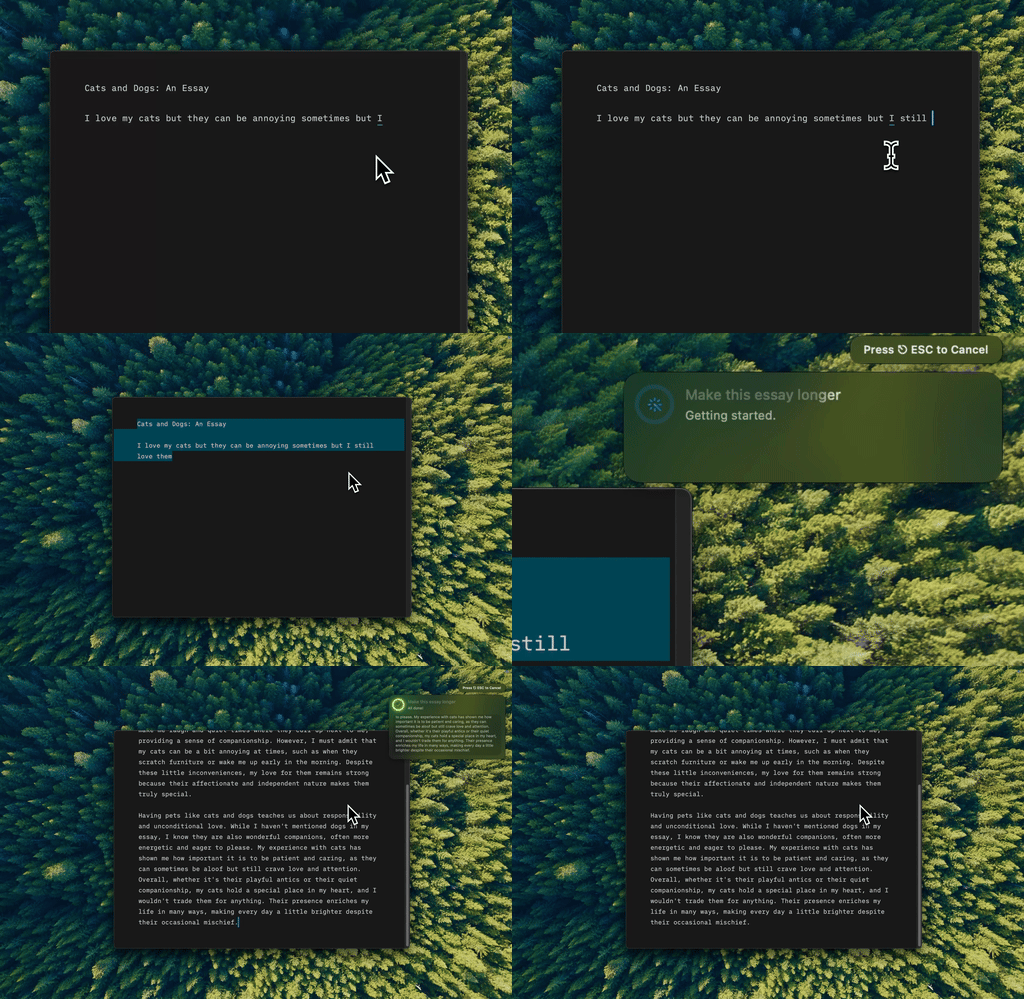
Type Mac — that's a bullet list from my notes app turning into a paragraph, in the same window, without a chat tab in between.
Writers lose more ideas than they use
Research, quotes, half-baked observations, a sentence that came to me in the shower: without a system, it scatters across apps and gets forgotten. Every idea I couldn't find again was an idea I never got to use.
The PARA method: four folders, no tags
Forte's framework skips elaborate tagging and color-coded categories entirely:
- Projects: active work with deadlines
- Areas: ongoing responsibilities, like a blog or newsletter
- Resources: topics I'm interested in for later
- Archive: finished work
I file things where they'll be useful, not where they logically belong.
A daily habit: capture, process, review
While writing, I drop new ideas into whatever project folder I'm working in. In the evening, I spend ten minutes moving my inbox into the right PARA folder. Once a week, I do a thirty-minute review: clear the inbox, check stalled projects, archive what's finished. Skip this habit and you're hoarding, not building a system, the same attention residue that makes an unfinished task expensive even when unseen.
Two mistakes that kill the system
Over-engineering it. Tagging taxonomies, nested folders, hours spent configuring plugins until the system becomes the work. A simple system I use beats a sophisticated one I don't. I started with Apple Notes and only moved to Obsidian once I'd outgrown it, the same slow-first instinct behind slow productivity for writers.
Capturing without processing. Notes I never distilled into something scannable turned out almost as useless as no notes at all.

AI adds search, summarization, and drafting
Three real upgrades over a plain notes app: search that answers a question instead of matching a keyword, summarization that distills a research dump into a paragraph, and drafting tools that bridge raw notes and finished prose. I select the bullet points I dropped in mid-walk, hit a shortcut, and get a first draft that's most of the way there, in my own voice because it can hold context about how I write. I cover that step on its own in turning notes into paragraphs with AI.
Year one you build the habit, year five you have an archive
Year one, I was building the habit. Year three, I could surface relevant past thinking for any new project instantly. Year five, I have a searchable archive of every idea, every piece of research, and every draft I've written.
Pick one note app, set up four PARA folders, and commit to the ten-minute processing habit. The best system is the one you're still using in six months.
The tool that turns notes into writing
Of every tool I tried for turning captured notes into finished paragraphs, Type Mac is the one still open on my Mac. I keep my PARA folders in Apple Notes, select the rough bullet points, and expand them into a draft with a shortcut in the same window, instead of copying them into a chat and copying the result back. It holds context about how I actually write, so what comes back sounds like my drafts and not a stranger's. It works the same way whether my PARA folders live in Apple Notes, Notion, or somewhere else, so switching note apps later doesn't mean losing the workflow. The gap: it only runs on the Mac. Half my capturing happens on my phone on that same walk, and there's no iPhone or Windows version to hand the notes to.
Your Second Brain remembers. Type Mac turns what it remembers into a draft.