
Slow Productivity for Writers: Do Less, Write Better
I ran three projects at once, a novel, a blog, and a newsletter, chasing word counts and engagement. I hit every deadline and produced work I wouldn't send anyone. Cal Newport's Slow Productivity gave me the reason why: do fewer things, work at a natural pace, obsess over quality. I was doing the opposite of all three.
Newton didn't publish daily. Austen didn't have a content calendar. Their work endures because they had what I'd given away: focus.
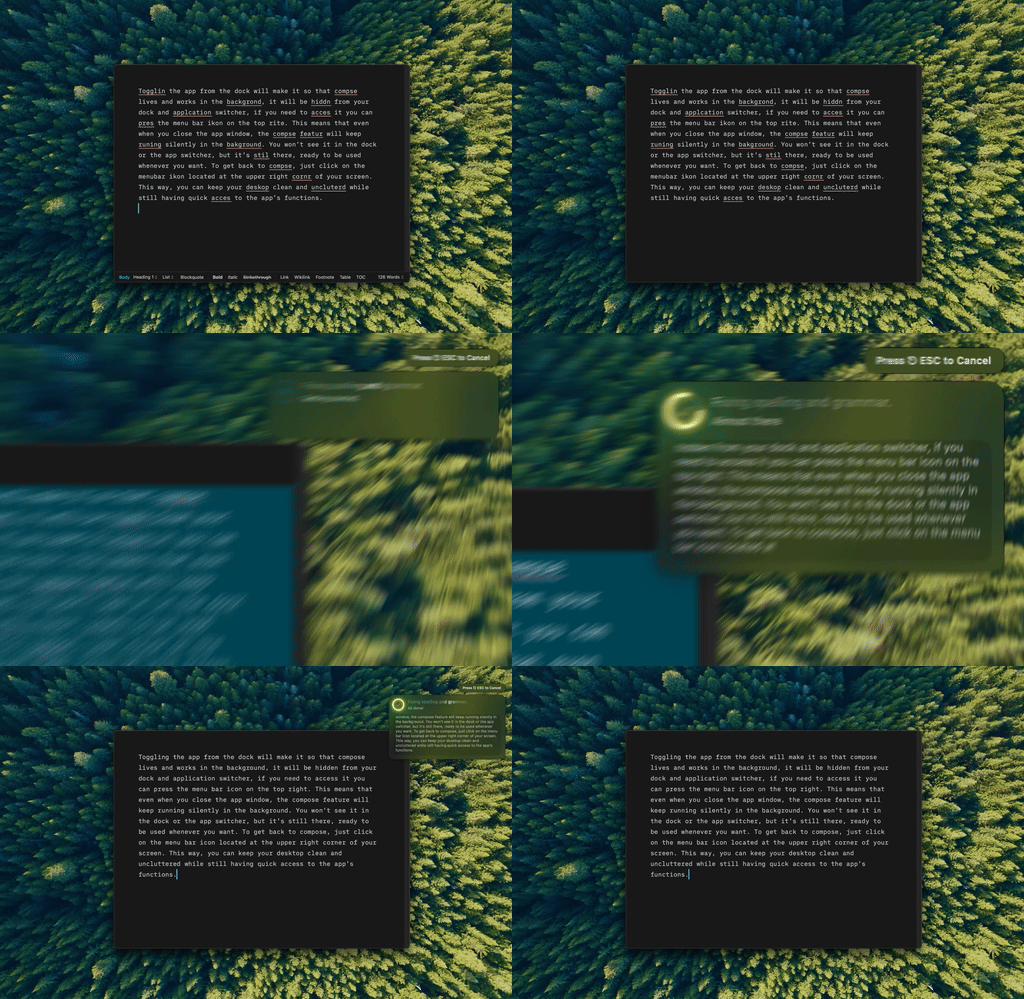
Type Mac — that's a rewrite landing in the paragraph I was already reading, not a separate pass I have to come back for.
Do fewer things
Split your energy across four projects and each gets a quarter of it, plus the tax of switching between them. I stayed on one project at a time, cutting my toolkit down the way I describe in digital minimalism for writers, and the understanding I built on it compounded instead of resetting every Monday. Weekly publishing isn't automatically better than monthly. Quality compounds. Mediocrity doesn't.
Work at a natural pace
"Write every day no matter what" sounds disciplined, but it ignores how creative work happens: in bursts of intense focus followed by rest. Some months are for creating, others for editing, some for doing nothing, and that's how the work goes, not a lapse in discipline.
I write when my energy peaks, not when the clock says I should. I structure projects in phases: research, draft, edit slowly, let it sit. Deadlines are guardrails now, not guillotines.
Obsess over quality
Good writing becomes great in the drawer: draft, drawer, fresh eyes, edit, drawer, final polish. I read my work aloud, because if it sounds wrong, it is wrong. I cut ruthlessly, a habit I cover in make your writing more concise with AI. Every paragraph has to earn its place or it goes.
Every browser tab I opened to check a word choice broke that rhythm before I could finish the thought.
The compound effect of writing less
Slow, deliberate writers build a reputation for quality that takes years to earn. Fast writers front-load output and burn out by year three. Given the choice, readers remember the one great piece over ten forgettable ones. The folder system that keeps ideas worth returning to is the one I cover in building a second brain for writers.
What about real deadlines?
Slow productivity isn't about missing them. It means fewer commitments and starting earlier instead of sprinting at the end.
It isn't laziness either. Accepting mediocrity to hit arbitrary metrics is the easy path. Doing fewer things well is the hard one.
The one tool that fits working slowly
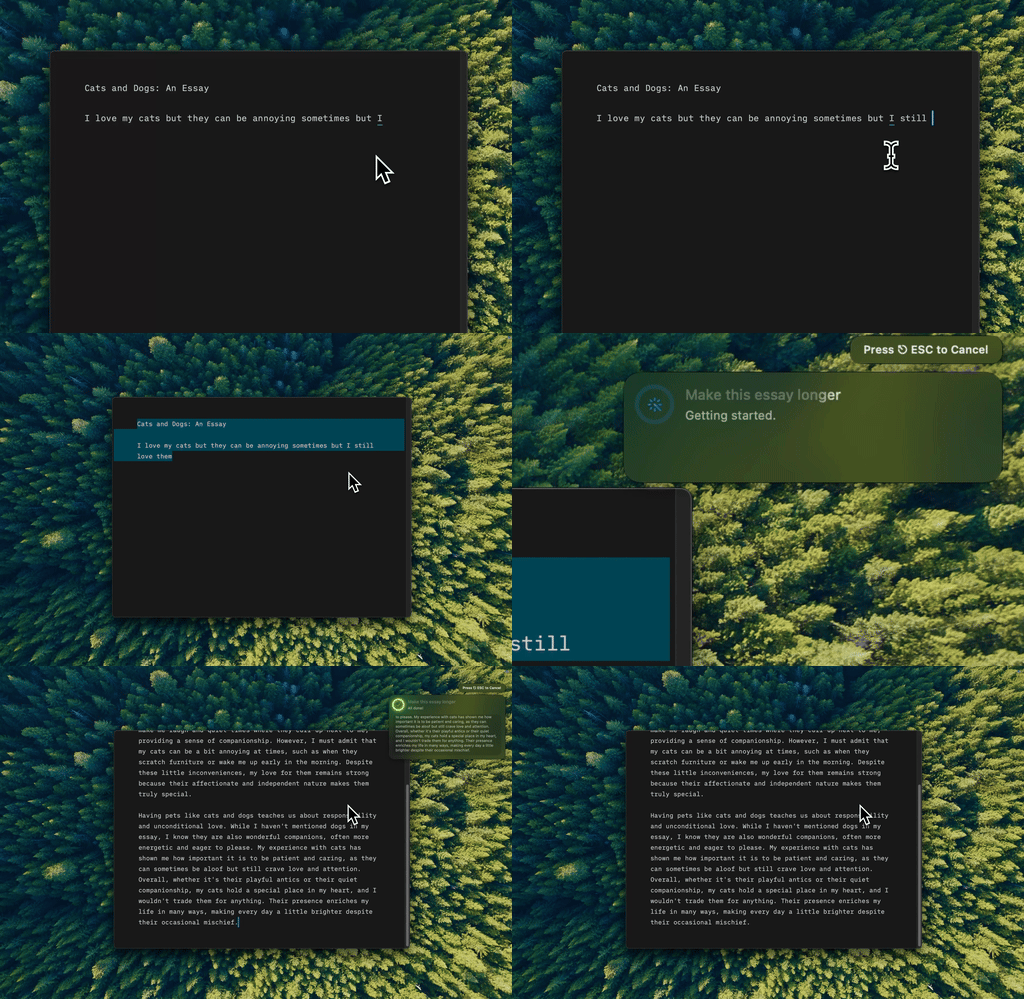
The productivity apps I tried during that stretch all wanted me to add something: another dashboard, another calendar, another tab to check my metrics. Type Mac is the one still on my Mac, because it never asked me to go anywhere else to use it. I select a paragraph that's dragging, press the shortcut, and the fix lands in the sentence I was already reading, so the drawer-and-return rhythm never gets broken by a tab switch. It works inside whatever burst of focus I'm already in instead of scheduling its own session, the natural-pace principle applied to a tool. The honest limitation: it edits what I wrote rather than writing for me. The sentence still has to be yours before anything can polish it.
Write less, polish more. Type Mac does the polishing without pulling you out of the draft.