Vibe Writing: The Rise of AI-First Writers
When Andrej Karpathy coined "vibe coding" in February 2025, accepting AI's suggestions without reading every diff, I recognized the pattern immediately. I'd been doing the same thing with prose for months: prompting, steering, accepting, publishing, and skipping the part where I type every word by hand.
Vibe writing has a name now
Vibe writing is creating content by directing AI rather than typing every word yourself. Instead of drafting, editing, polishing, and publishing, I prompt, steer, accept, and publish. I bring the idea, the tone, the audience, the constraints. The AI brings the words.
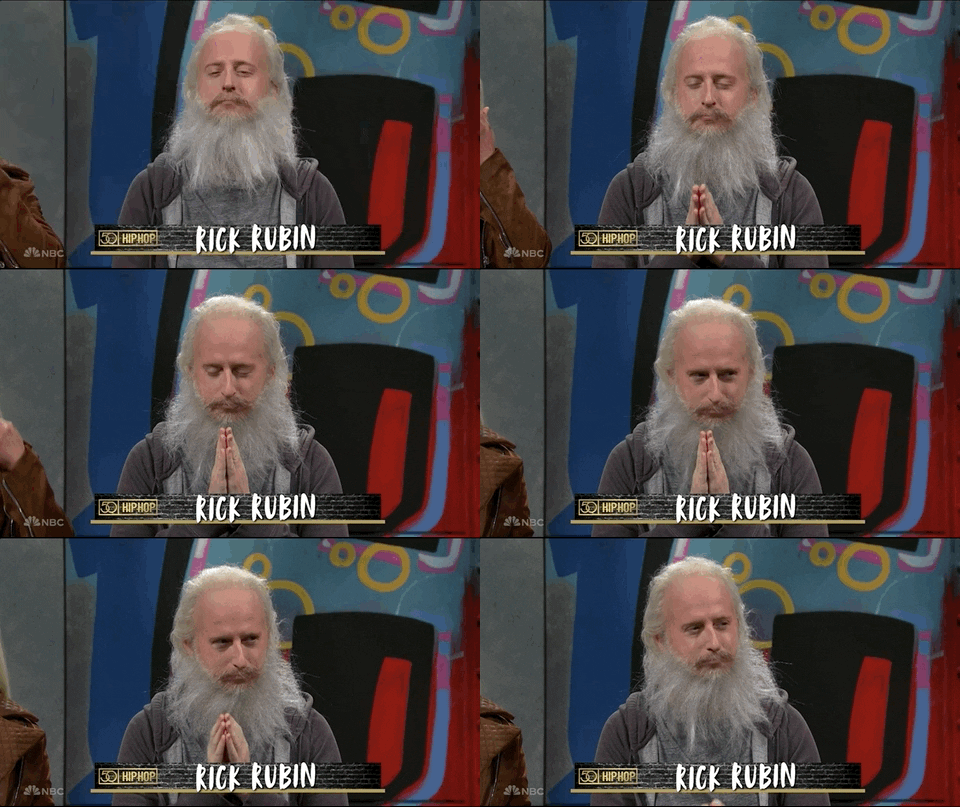
Rick Rubin never played an instrument on those albums. He brought the vision and the taste. Type Mac is a keyboard shortcut away in every Mac app I write in: grammar, rewriting, expansion, translation.
Founders I know already write investor updates this way. Developers generate documentation by prompting instead of drafting. Marketers turn bullet points into prose with AI. They have the ideas and the domain knowledge; what they don't have is time to craft every sentence by hand, the same trade agentic workflows make elsewhere in a writer's toolkit.
Constraints separate vibes from slop
"Write something about productivity" is a bad prompt, and it produces bad output. "500-word post for indie hackers about why keyboard shortcuts matter more than you think" gives AI something to work with. Better constraints get me better vibes, every time.
Iterate on feel, not grammar
I don't say "fix paragraph three." I say "this feels too stiff" or "the opening doesn't grab me" or "this doesn't sound like something I'd write." AI is surprisingly good at reading vibes when I describe them, and worse when I try to micromanage word choice.
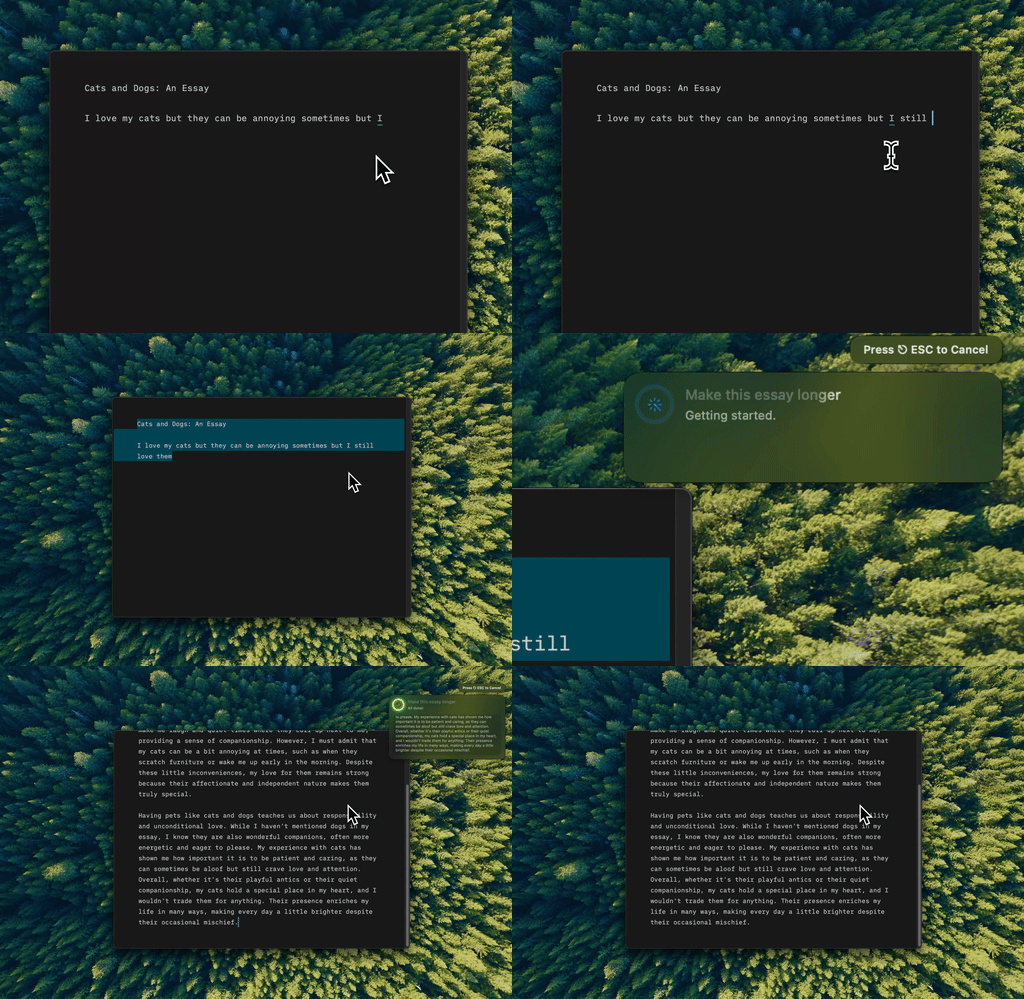
The vibe writing loop, in practice: select rough notes, press a shortcut, get polished prose back.
"You're not really writing"
Some people say this isn't really writing. Same logic as Rick Rubin: the output is what matters, not the mechanism. If the content connects with readers and reflects your ideas, how it got there is beside the point.
The counterargument is real, though: writing is thinking, and outsourcing the writing risks outsourcing the thinking too. Both can be true depending on what you're writing. I vibe write my investor updates. I keep what I've learned about protecting your voice close whenever my own name is on something that matters more.
Start low-stakes to build the habit
Slack messages, social posts, meeting summaries: the ideas matter, the prose doesn't need to be art. I got comfortable with prompt, review, adjust, before I trusted the same loop on anything bigger, and I still run a conciseness pass before publishing, since vibe drafts run long by default.
Voice-to-text is where vibe writing reaches its final form: speak your ideas, AI transcribes and polishes into prose, you review and publish. Pure creative direction, no keyboard at all.
What I vibe write with
Type Mac is what I actually kept running. It's not a separate app I open to vibe write, it's the same shortcut I already use for editing, so directing AI and touching up my own sentences live in one habit instead of two:
- One shortcut for every vibe move: rewrite, expand, change tone, so I'm not juggling tools mid-thought
- It works inside whatever I'm already writing in, so the idea doesn't cool off while I copy it somewhere else
- BYOK means I can point it at whichever model I want the vibe from that day
The honest limitation: it edits text you've already written rather than ghostwriting from a blank page, so the earliest step, turning nothing into a first draft, still starts somewhere else.
Direct the words, keep the taste. Type Mac is the shortcut I reach for once the vibe writing actually starts.